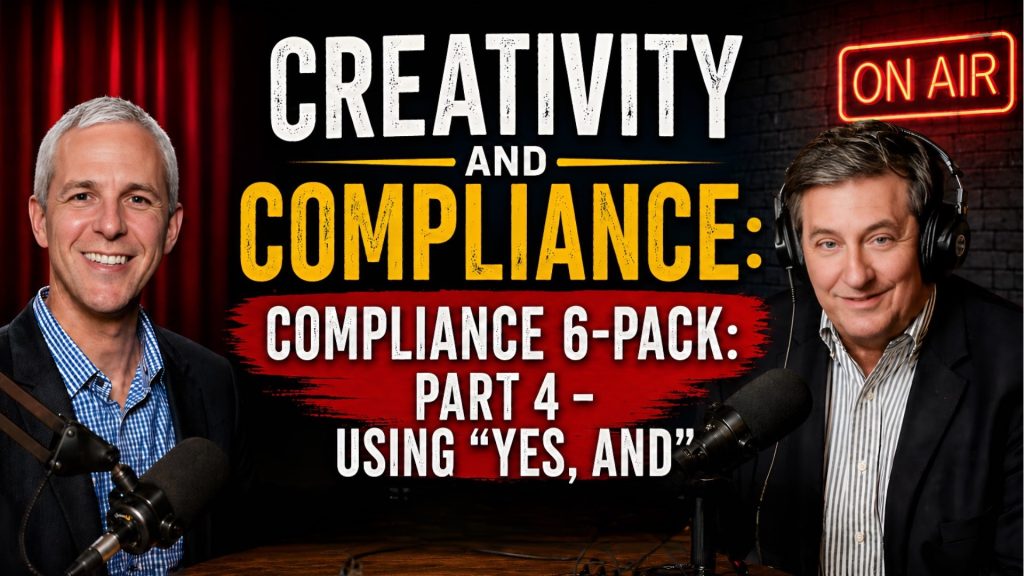
Improv, Psychological Safety, Compliance & Speak Up Culture: Part 4 “YES-AND”

Jun 4, 2026

This is part 4 of a 6-part series of Creativity & Compliance, where Tom & Ronnie explore the connections between improv comedy and improving compliance, psychological safety and speak up culture. Today's episode, "YES-AND"

Hosts

Tom Fox

Ronnie Feldmen

 Resources

60-Second Communication & Awareness Shorts
A variety of short, customizable, quick-hitter “commercials” including songs & jingles, video shorts, newsletter graphics & Gifs, and more. Promote integrity, compliance, the Code, the helpline and the E&C team as helpful advisors and coaches.

Workplace Tonight Show! Micro-learning
A library of 1-10-minute trainings and communications wrapped in the style of a late-night variety show, that explains corporate risk topics and why employees should care.

Custom Live & Digital Programing
We’ll develop programming that fits your culture and balances the seriousness of the subject matter with a more engaging delivery.

Tales from the Hotline
Fast, fun case studies about workplace behavior gone wrong, brought to life by comedians and storytellers.

About This Episode

Improv, Psychological Safety, Compliance & Speak Up Culture
Part-4, “YES-AND”

This is part 4 of a 6-part series of Creativity & Compliance, where Tom & Ronnie explore the connections between improv comedy and improving compliance, psychological safety and speak up culture. Today’s episode, “YES-AND”


Improvisation is a spontaneous, collaborative art form where performers take suggestions from the audience and create characters, dialogues, scenes and stories spontaneously, off the top of their heads, without a script.

Psychological safety can be defined as the belief that you won’t be punished for speaking up with ideas, questions, mistakes or concerns. Creating psychological safety in your organizations is arguably the most important challenge that an ethics & compliance program faces.

So what do these two things have to do with each other? Strange as it may sound, quite a bit. The philosophies and techniques behind creating an environment where comedic creativity can thrive and creating an environment where employees feel safe to speak up to challenge business decisions and report concerns are similar. There is a lot that ethics and compliance professionals can learn from this connection. You can get a few A-Has from the Ha-Has.

YES-AND”
Yes-And is the most well-known tenet of improvisation. On stage, Yes-And means to accept, agree and add something. Improvisers all commit to follow this rule. No matter what is said or done, we drop our idea, agree and add one thing. Drop-Accept-Agree-Add. This is reciprocated and that is how a scene is built, collaboratively without a script. Think of YES-And as the main instrument that allows a group to play music together. It is both a practical methodology and a philosophical mindset that powers the vehicle to propel an idea forward.

  • The Consequences of No: In improvisation, “No” stops a scene from moving forward and negating often devolves into argument. “No” is often a knee-jerk reflex. It’s a way of stopping action and maintaining control over an idea or situation or person. As a homework assignment, keep track of how many times you say or hear “No” in one day. Once your ear is tuned into it, you’ll realize how often we all use “No” and most of the time it’s unnecessary and unhelpful.In ethics and compliance, “No” can be pretty common. “Can I provide Taylor Swift tickets to my client to help grease the wheels for a new contract?” The answer is likely “No” and that’s okay. “No” has a purpose. However, “No” has consequences. “No” can lead your audience to feel anger, frustration or eventually apathy. If all they ever hear is “No” it’s likely that they will stop coming to you for advice and support. A constant refrain of “No” increases your risk.


  • Bring a Brick: Another improv tenet is “Bring a brick, not a cathedral.” When creating a scene together on stage, we don’t benefit from long monologues. That would be stand-up comedy or drama. We create together, by listening, agreeing to and validating what we just heard and adding one thing. Your partners then drop their agenda, agree and add one thing. Just bring a brick. What this means is that an ensemble is more effective when we all contribute. So how do we apply this concept to E&C in our organizations?


So how do we apply this concept to E&C in our organizations? Listen to the podcast as we unpack two philosophies and techniques.

  • Collaborative Problem Solving
    • Open to possibility
    • Inclusivity
    • Good Vibes and Halo Effect
  • Value Add
    • The language of business
    • Policies, Training & Comms

If you’re not into listening and would prefer reading, you can download our Whitepaper: Improv, Compliance, Psychological Safety & Speak Up Culture


Ronnie Feldman is the CEO & Creative Director at Learnings & Entertainments, a learning content provider made up of comedians and entertainers with a focus on corporate risk. We make compliance cool at www.LearningsEntertainments.com

Related Episodes