 Entertaining Training
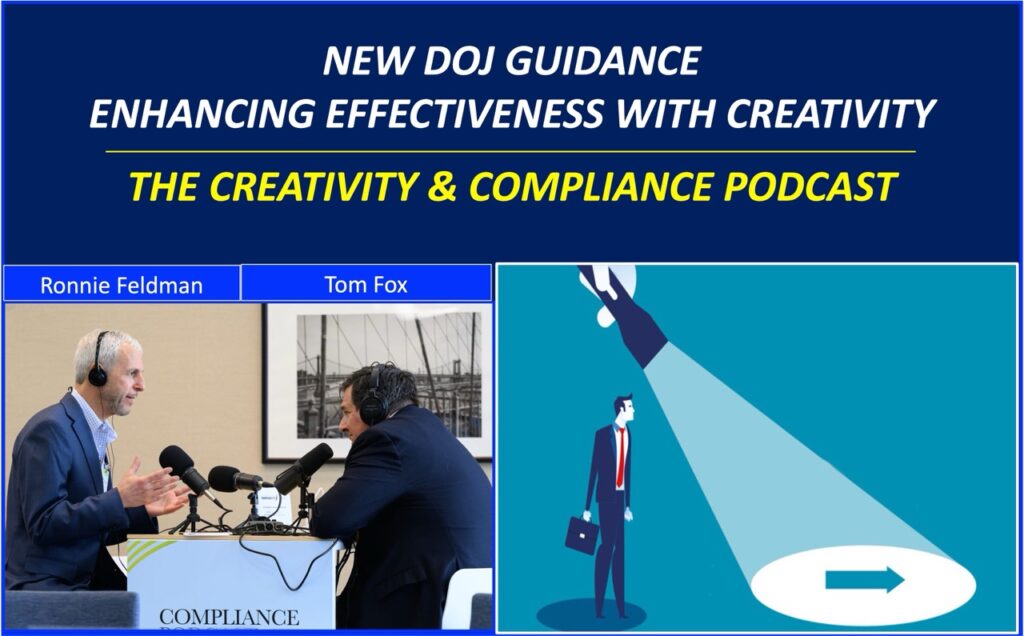
In this episode of Creativity & Compliance, Tom & Ronnie discuss the new DOJ guidance and share creative strategies and ideas on how to improve E&C program effectiveness.
The DOJ has provided enhanced guidance for corporate compliance programs. Their evolving standards continue to point programs in a direction that emphasizes effectiveness.
- Proactive
- Accessible
- Tailored & Relevant
- Engaging
- Values-Based vs. Rules Based
- Evolving Based on Lessons Learned
- Focus on Speak Up
- Measurement
- Culture
—- —- —–
This is good news for all of you out there who want to shift your time and resources away from that big, bloated, mind-numbingly boring, rules-based, legalese, check-the-box annual training that goes out once a year. What they are saying is that it actually does not check-the-box…because it’s ineffective. The focus should be on positivity and prevention, relevance, engagement, values and culture. And guess what? There are lots of creative approaches that are helpful. Here are a few.
- Utilize shorter, more frequent, more targeted, entertaining communications, in a variety of creative formats and styles.
- Speak Up communications for all. Risk based communications based on relevance.
- Focus on what to do or not to do versus a policy push.
- Drive traffic to policies and resources (accessible) and measure that access.
- Share interesting, real stories and lessons learned to take things from the theoretical to the practical.
- People love to hear the scuttlebutt from your organization. Share stories that show how these problems occur. You can protect anonymity while still showcasing the interesting nuances of cases that happen to everyday, regular people.
- Utilize interesting stories in the news and tie it back to your organization. There are plenty of stories of corruption, fraud, and improper behavior that can be utilized as teachable moments.
- Involve your leadership in the storytelling. Interviewing executives about these cases (videos, podcasts, etc.) to hear their reactions about how to navigate ethical dilemmas is powerful.
- Focus on positive, proactive, helpful guidance through regular communications and nudge-learning and then measure those things.
- There is a big focus on measurement of learning. Some out there will hear measurement and revert back to that bad, boring training because it’s the easiest to measure. The focus should always be on prevention and effectiveness.
- Remember, knowledge is only part of the equation, so you can’t just measure “passing the quiz.” Other key measurement includes:
- Awareness of policies.
- Access to policies and learning resources.
- Awareness of speak up reporting channels.
- Use of speak up reporting channels.
- Belief in a sense of organizational justice, meaning that bad behavior will be dealt with regardless of position, performance or tenure.
- All training and communications should be mindful of how that messaging might impact the culture. Remember, we’d rather have employees trust that there is a sense of organizational justice than pass the test. If they pass the knowledge check and don’t trust you, they will bury their problems. The inverse of that means that they may not know, but they’ll ask for help.
—- —- —–
There is a lot of leeway on how to build your program, but the focus should always be on prevention. Learning theory and behavior science tells us that being creative, positive and proactive with short, snackable, bite-sized communications and microlearning is a more efficient and effective way to mitigate risk. Being creative and entertaining is helpful.
Ronnie Feldman is the CEO & Creative Director at Learnings & Entertainments, a learning content provider made up of comedians and entertainers with a focus on corporate risk. www.LearningsEntertainments.com